How to choose the right voltage converter.
Some countries run on 230V while others use 110V. A voltage converter bridges the gap — safely and reliably — so you can use your favorite devices where ever you go. But knowing which converter to buy for your device can be a daunting task. This guide will remove the guess work and help you find the right one.
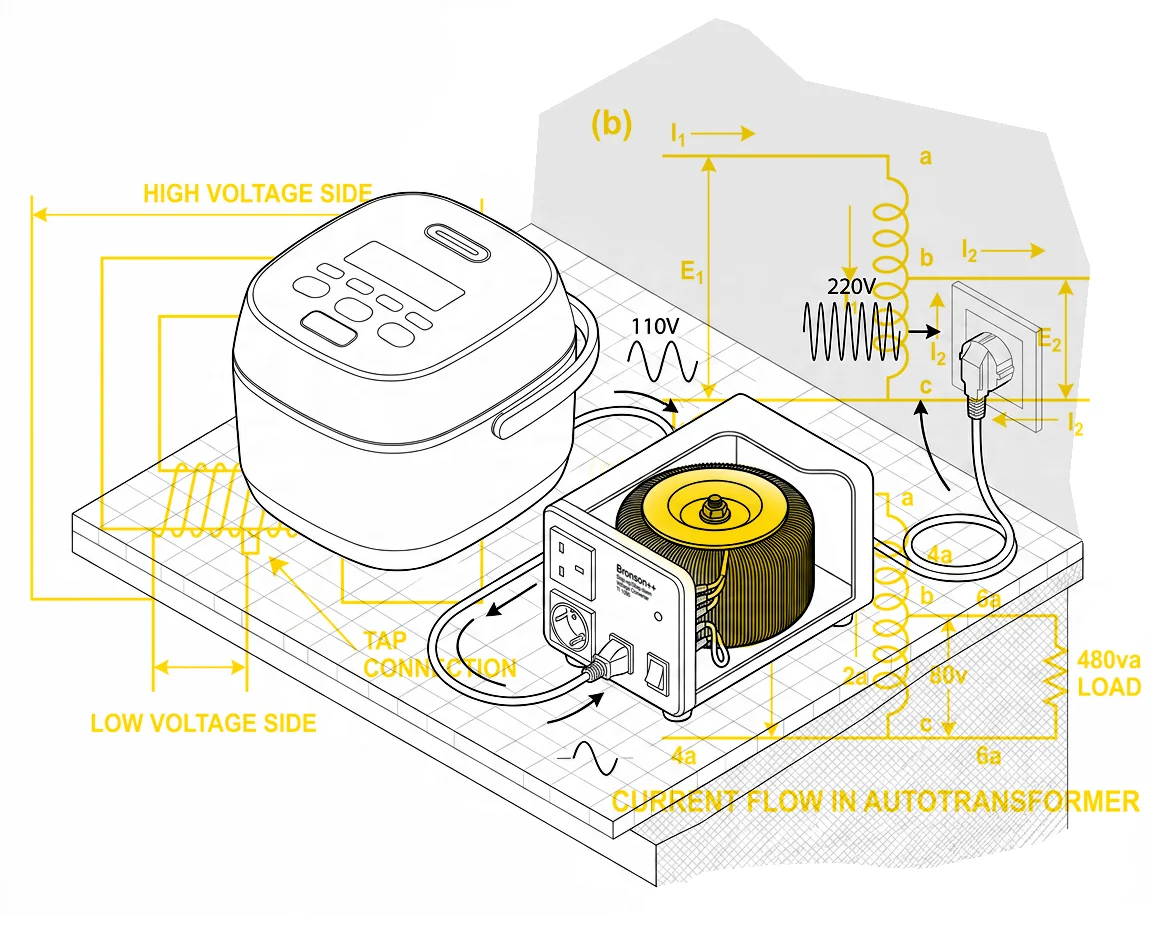
VOLTAGE CONVERTER CALCULATOR
Not sure which converter you need? Let's work it out.
Answer 3 questions — we'll point you to the right product.
VOLTAGE CONVERTER CALCULATOR
Not sure which converter you need? Let's work it out.
Answer 3 questions — we'll point you to the right product.
THE BASICS
What does a voltage converter do?
Your wall socket and your device need to use the same voltage. When they don't — a voltage converter handles the difference between them so you can safely use your devices anywhere in the world.
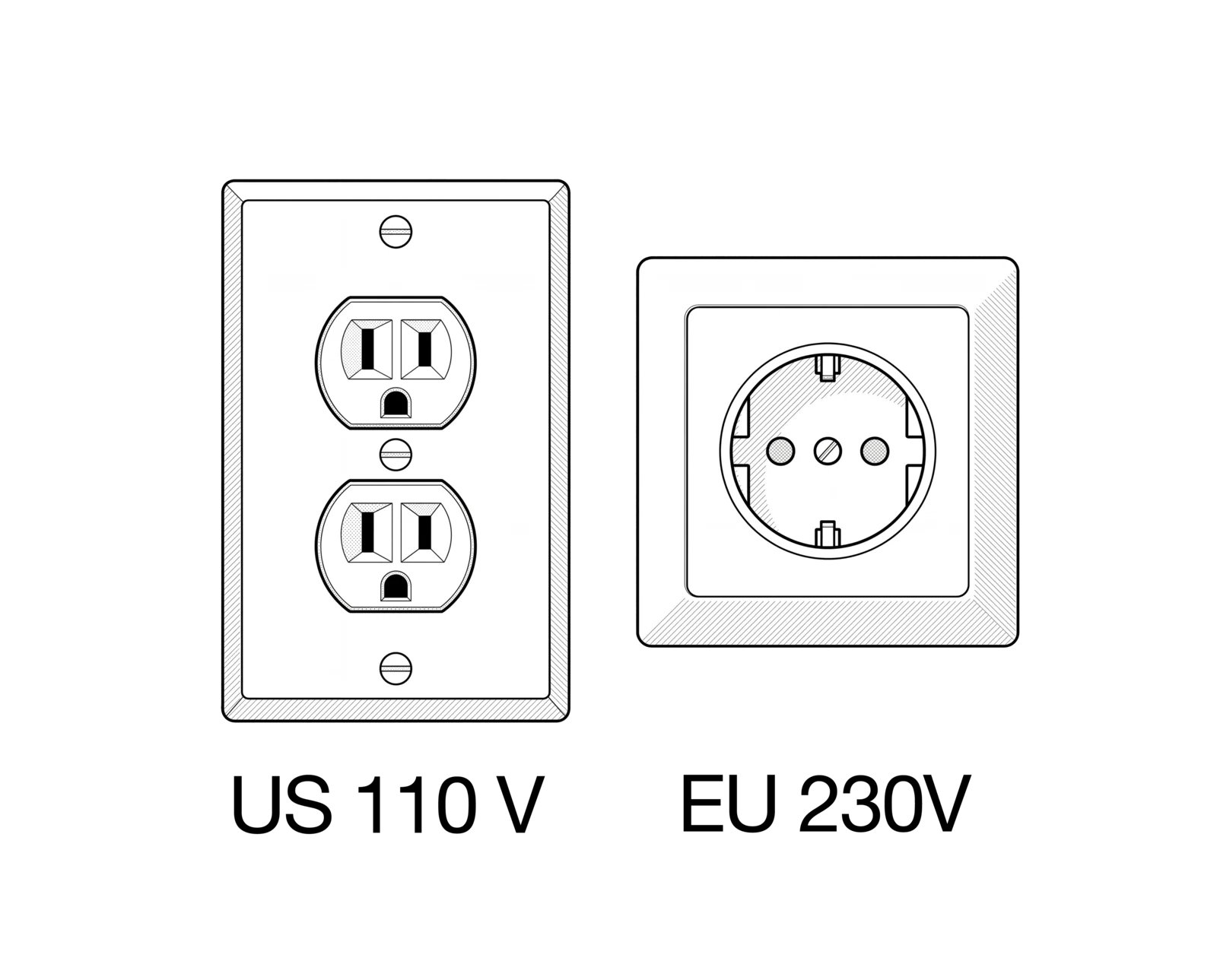
Your wall socket.
In Europe, the UK, China and most of the world, wall sockets deliver power at 220-230V. In the USA, Canada, and parts of Latin America, the standard is 110–120V. Japan is 100V.
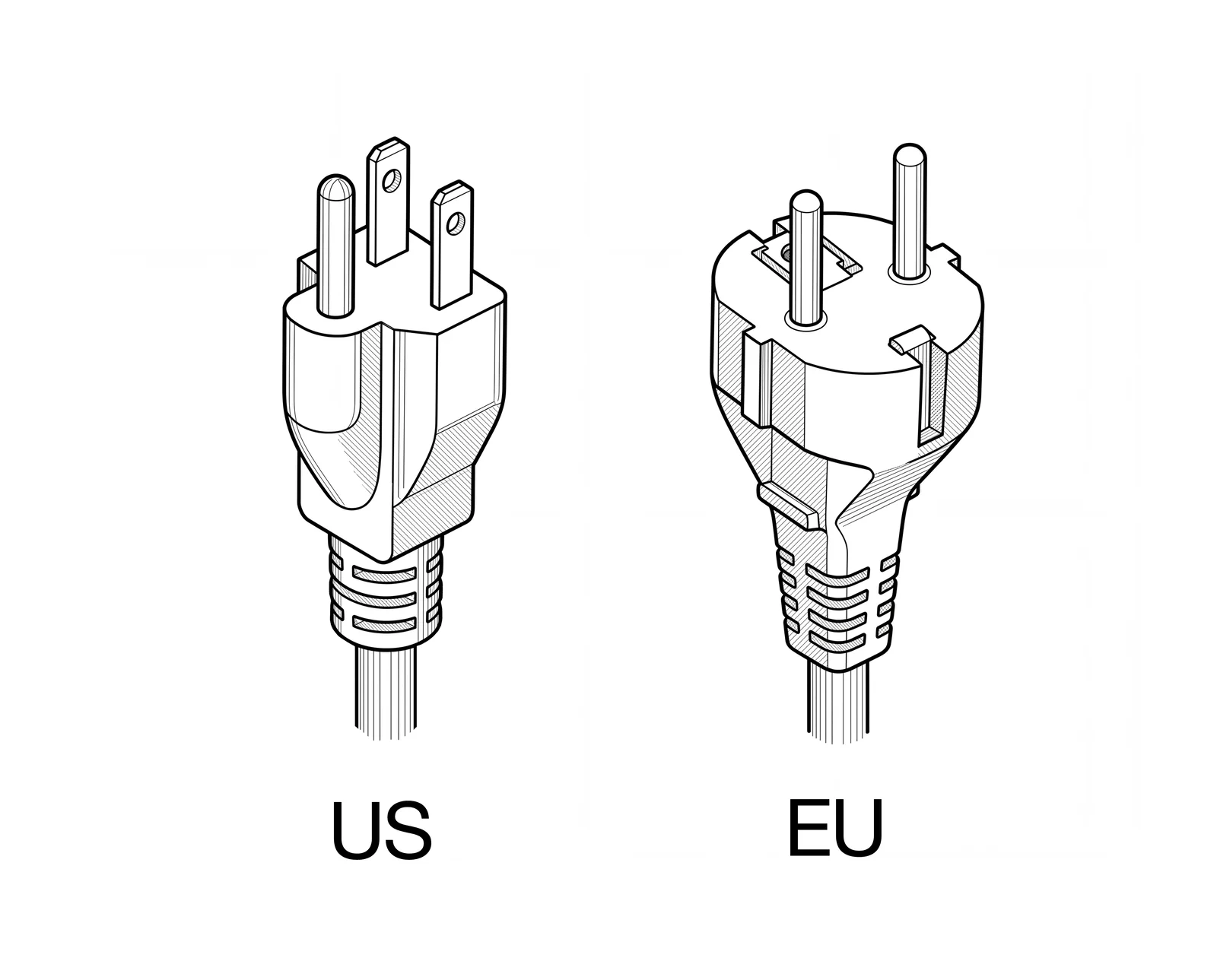
Your device.
Every electronic device or appliance is built for a specific voltage range. US appliances expect 110V. European appliances expect 230V. Connecting to the wrong voltage damages — or destroys — them.
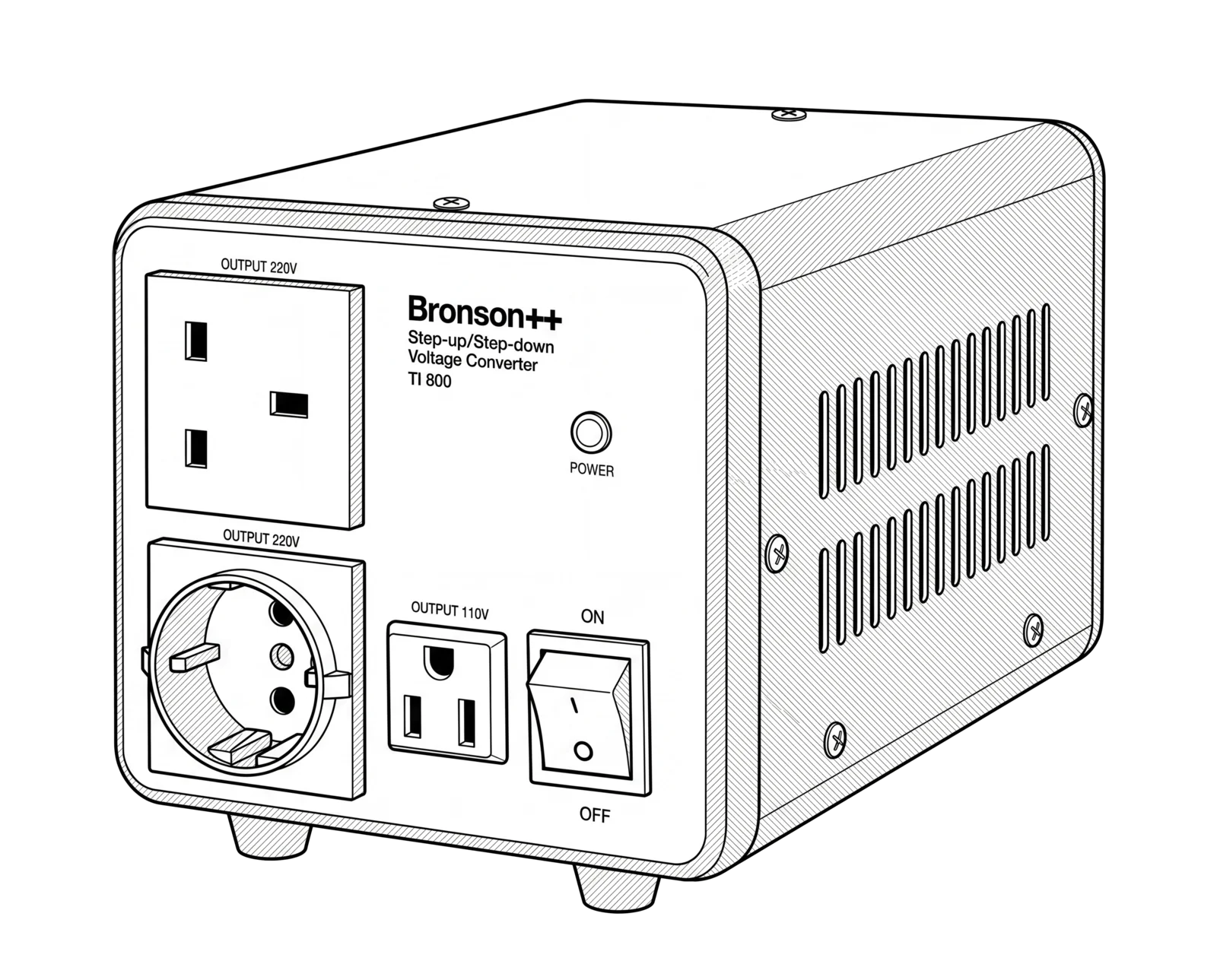
The converter.
A voltage converter sits between the socket and your device. It steps the voltage up or down to exactly what your appliance needs — safely, reliably, and continuously.
THE RISKS
What happens if I don't use one?
If you neglect to use a proper voltage converter you risk ruining your devices or worse.
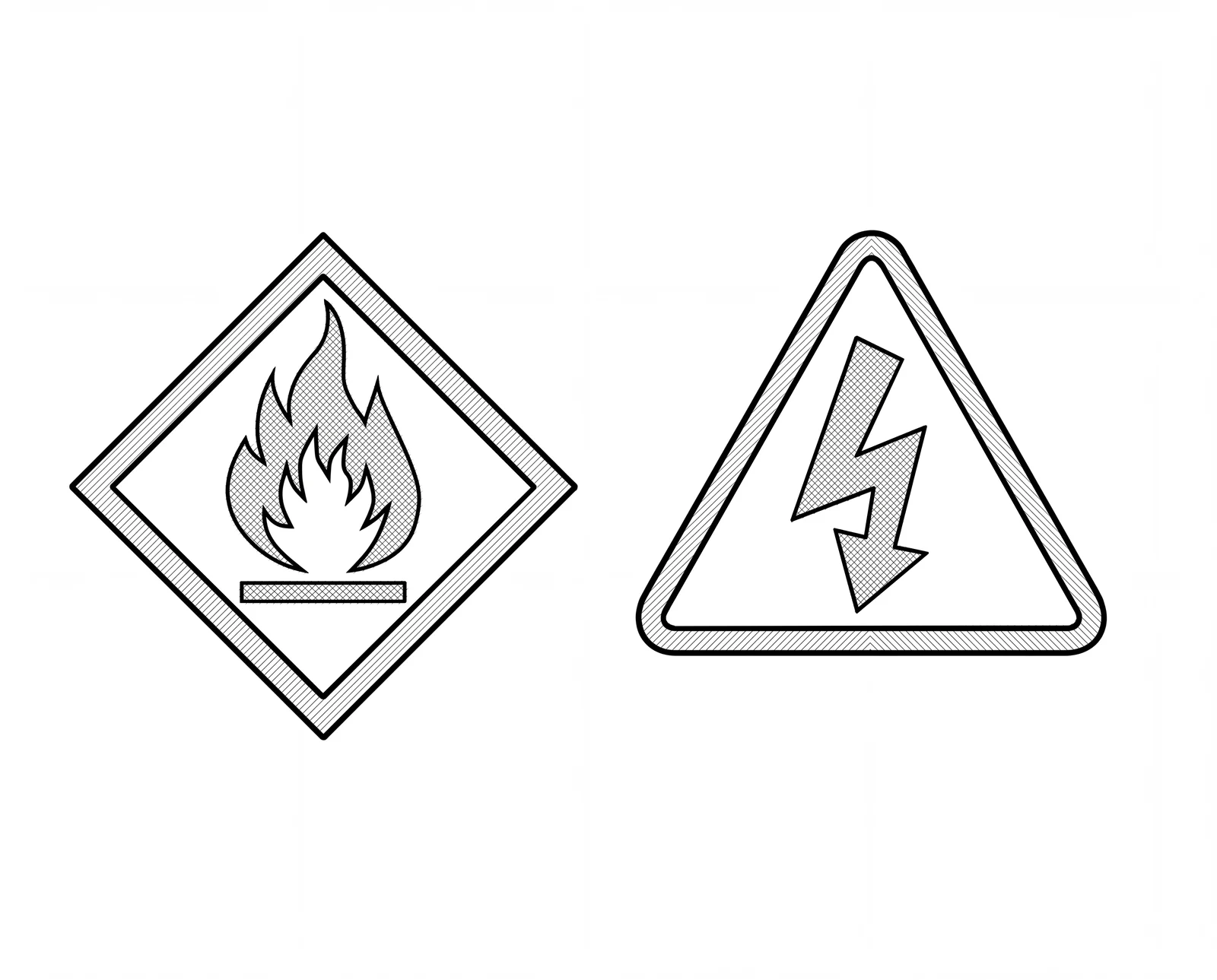
Too much voltage.
Plugging a 110V device into 230V causes immediate damage — motors burn out, electronics fry, and in some cases appliances catch fire.
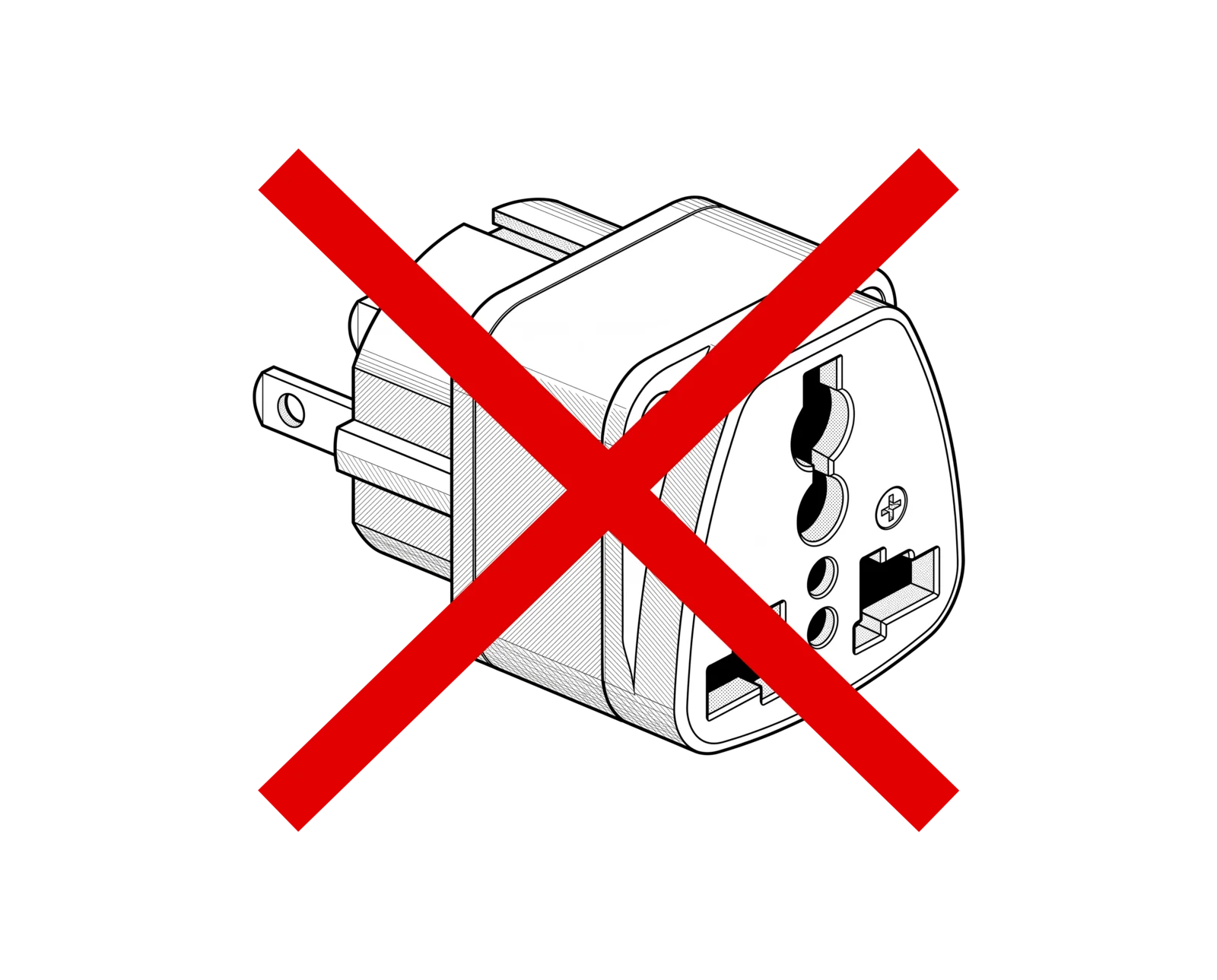
Plug adapter ≠ Converter.
A plug adapter does not convert voltage, it only changes the shape of the plug. If you plug a US appliance into a European socket with only an adapter, you are feeding it 230V — twice what it expects.
Too little voltage.
Plugging a 230V device into 110V usually means the device won't work at all, or runs poorly — motors spin slowly, heaters don't reach the correct temperature, and the device can overheat trying to compensate
DIRECTION MATTERS
Step down vs step up.
The direction of conversion depends on where your device was made and where you want to use it.
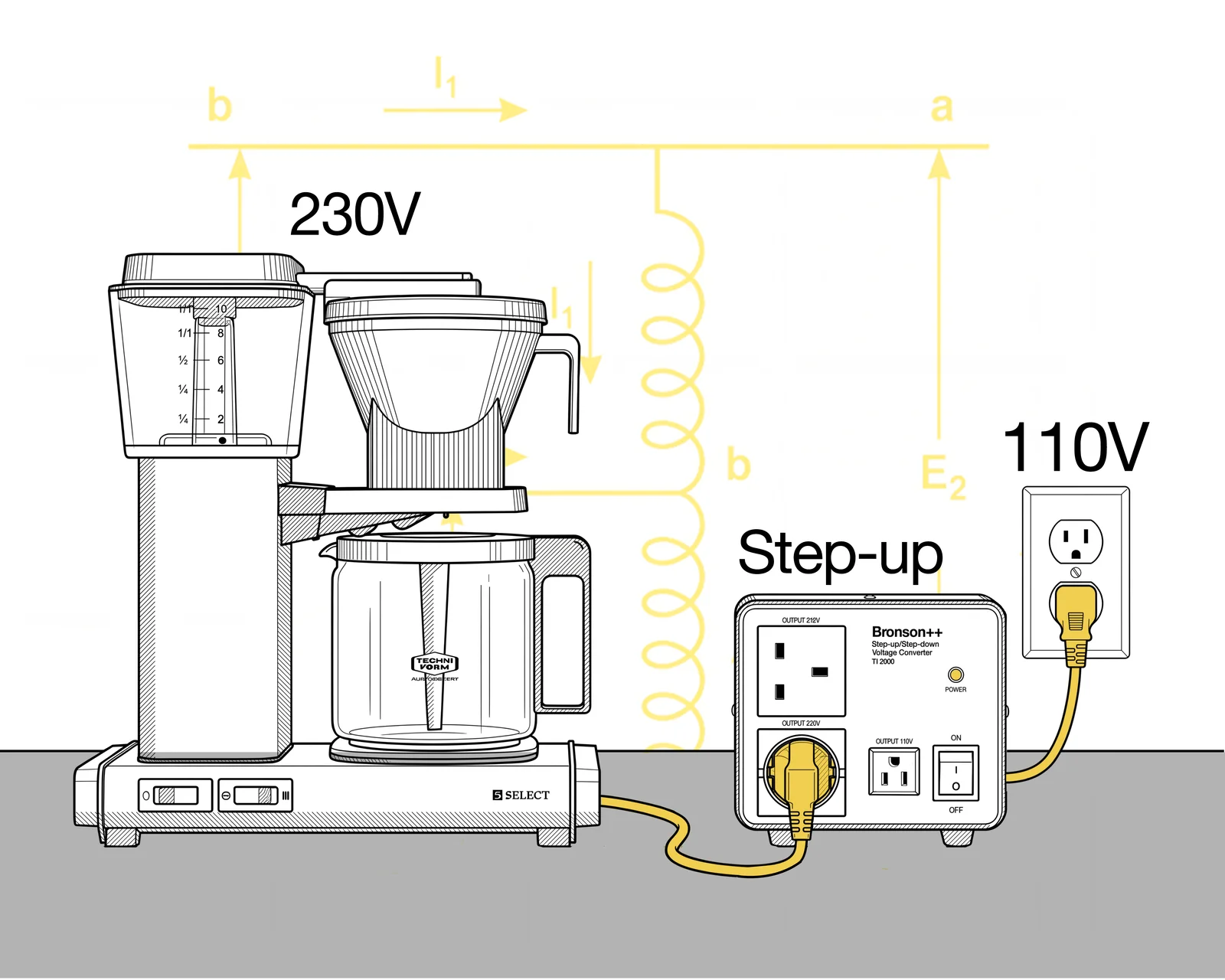
Step up. ↑
110V socket → EU device
You're in the USA (or anywhere with 110V sockets) and you want to run an appliance built for European markets. A step-up converter raises 110V up to 230V.
e.g. Running a European food processor in a US kitchen.
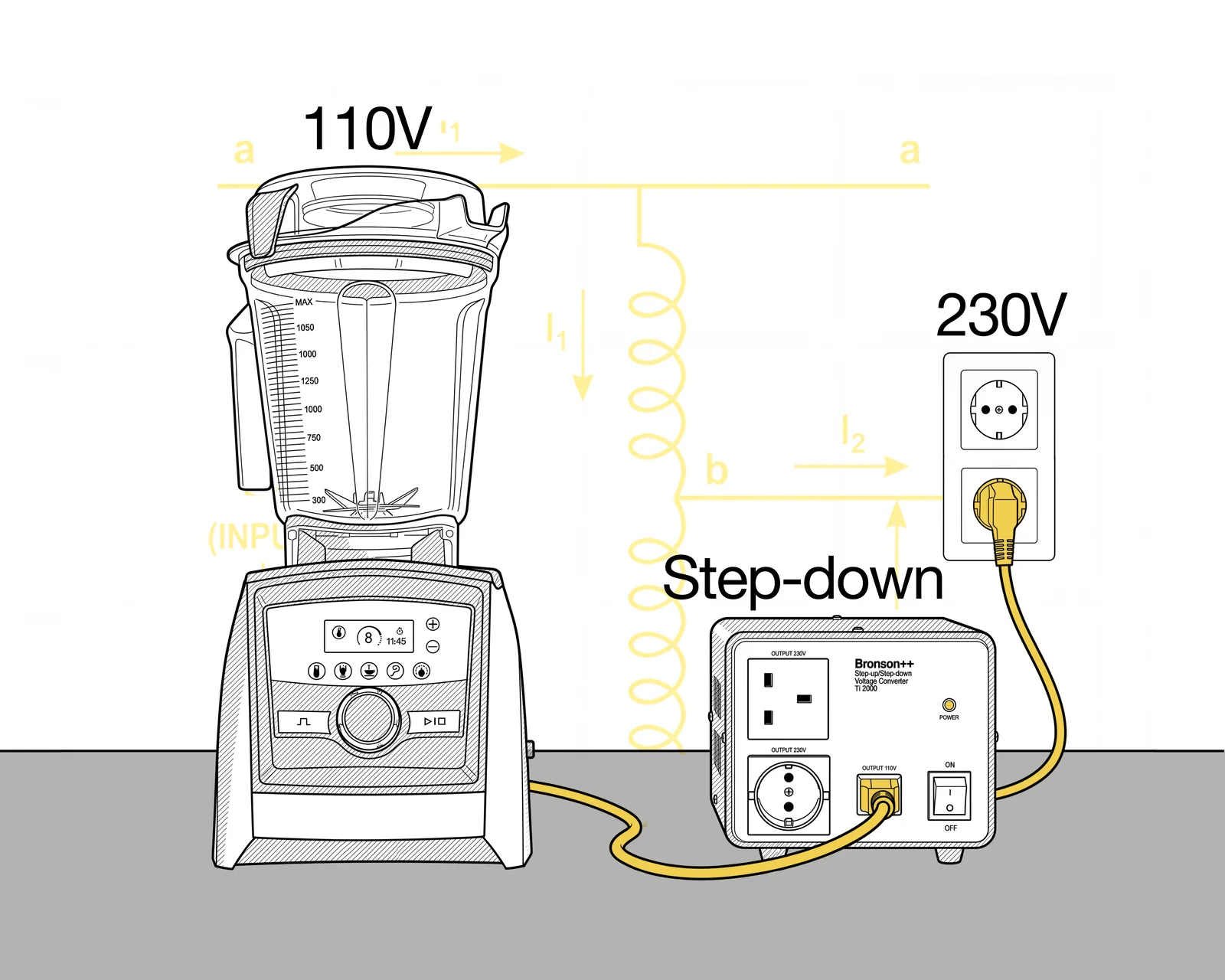
Step down. ↓
230V socket → US device
You're in Europe (or anywhere with 230V sockets) and you want to run an appliance built for the US market. A step-down converter reduces 230V down to 110V.
e.g. Running a US coffee maker in a German apartment.
DON'T SKIP THESE
Important details.
Peak vs continuous.
Most converters show two ratings: a peak wattage and a continuous wattage. The continuous rating is what matters — it's the load the converter can sustain indefinitely. The peak rating only covers brief startup surges from motors and compressors. Always choose your converter on continuous wattage, not peak.
50 Hz vs 60 hz.
Most modern devices — laptops, chargers, TVs, game consoles — accept both 50 Hz and 60 Hz. Check your device label for "50/60Hz" and you're fine. Voltage converters change voltage only, not frequency. The only edge cases are electric motors (some older power tools) and analogue clocks that rely on grid frequency for timekeeping.
Total wattage.
To calculate your total wattage, check the sticker, or label on each device for its wattage (W) rating and add them up. If you only see amps (A) and volts (V), multiply them: W = V × A. Once you have a total, add 20% as a safety margin — so 1,000W of devices means you need at least a 1,200W converter.
When a device says 100–240V.
Devices labelled 100–240V 50/60Hz — common on laptops, phone chargers, and many modern electronics — are dual voltage and work worldwide without a converter. You only need a plug adapter for the socket shape. Always check the label before buying.
OUR CONVERTERS
Bronson's line of converters.
Our line of converters cover a wide variety of applications, see our all of them at a glance.
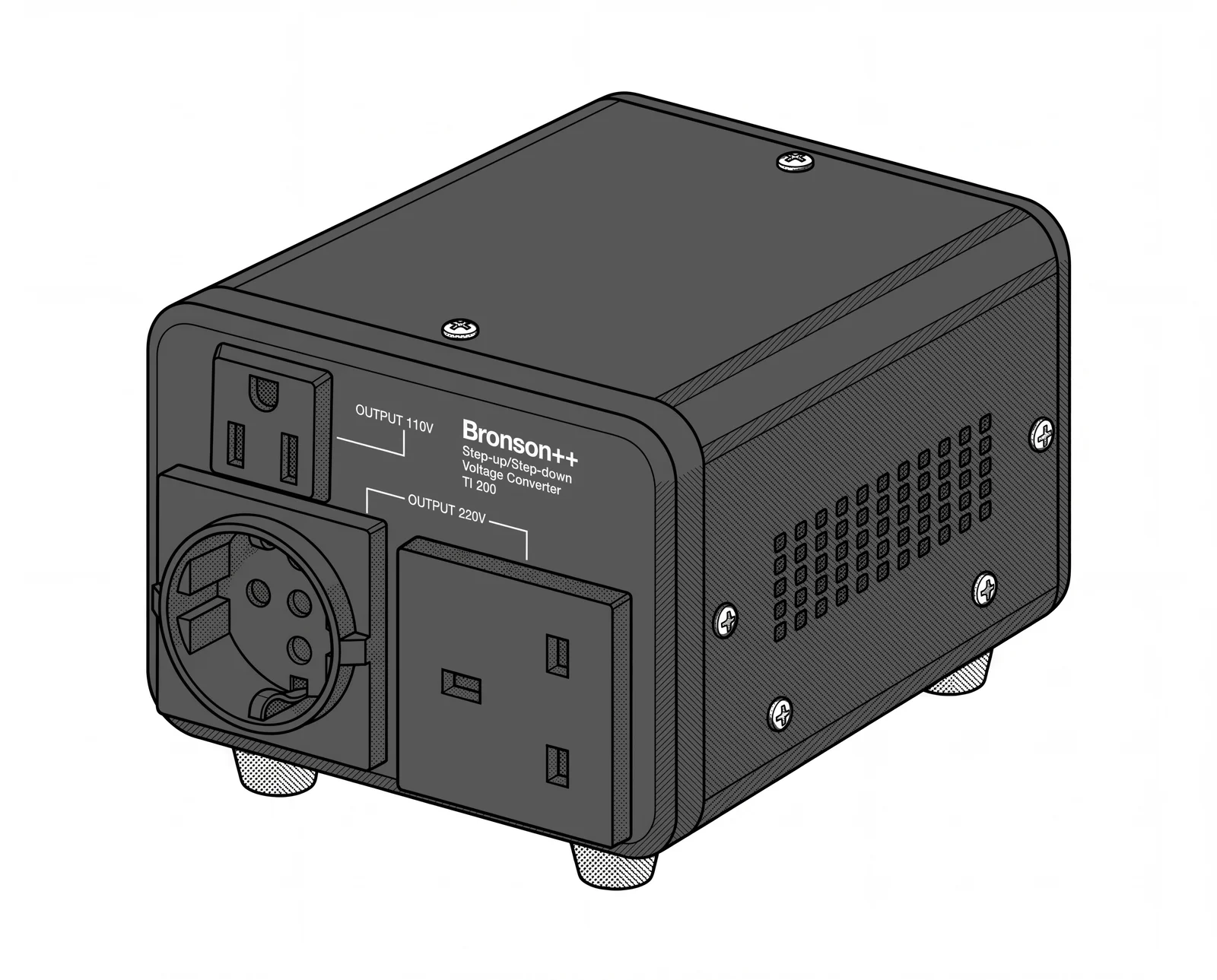
TI Series →
200w - 3,000w
For travellers and home users. Handles both step-up and step-down, includes US, UK, and NEMA outlets, and is compact enough to pack in a bag.
- Step up + step down
- Compact & portable
- US, UK & NEMA outlets
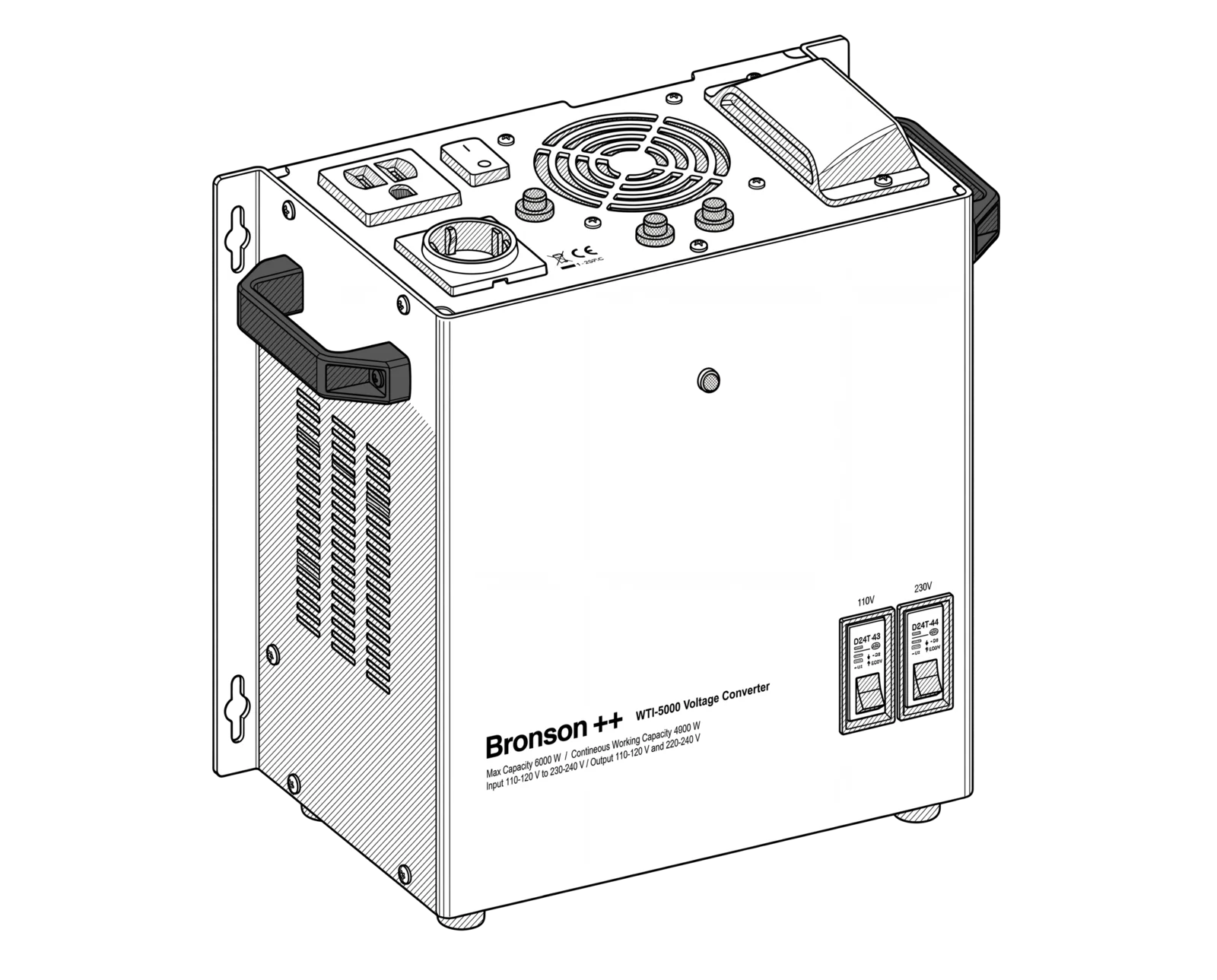
WTI Series →
3,000w - 10,000w
For RVs and permanent installations. Built for continuous heavy-duty use — the choice for motorhomes, permanent home installs, and sustained high-wattage conversion.
- Step up + step down
- Permanent installation grade
- Up to 10 kW continuous
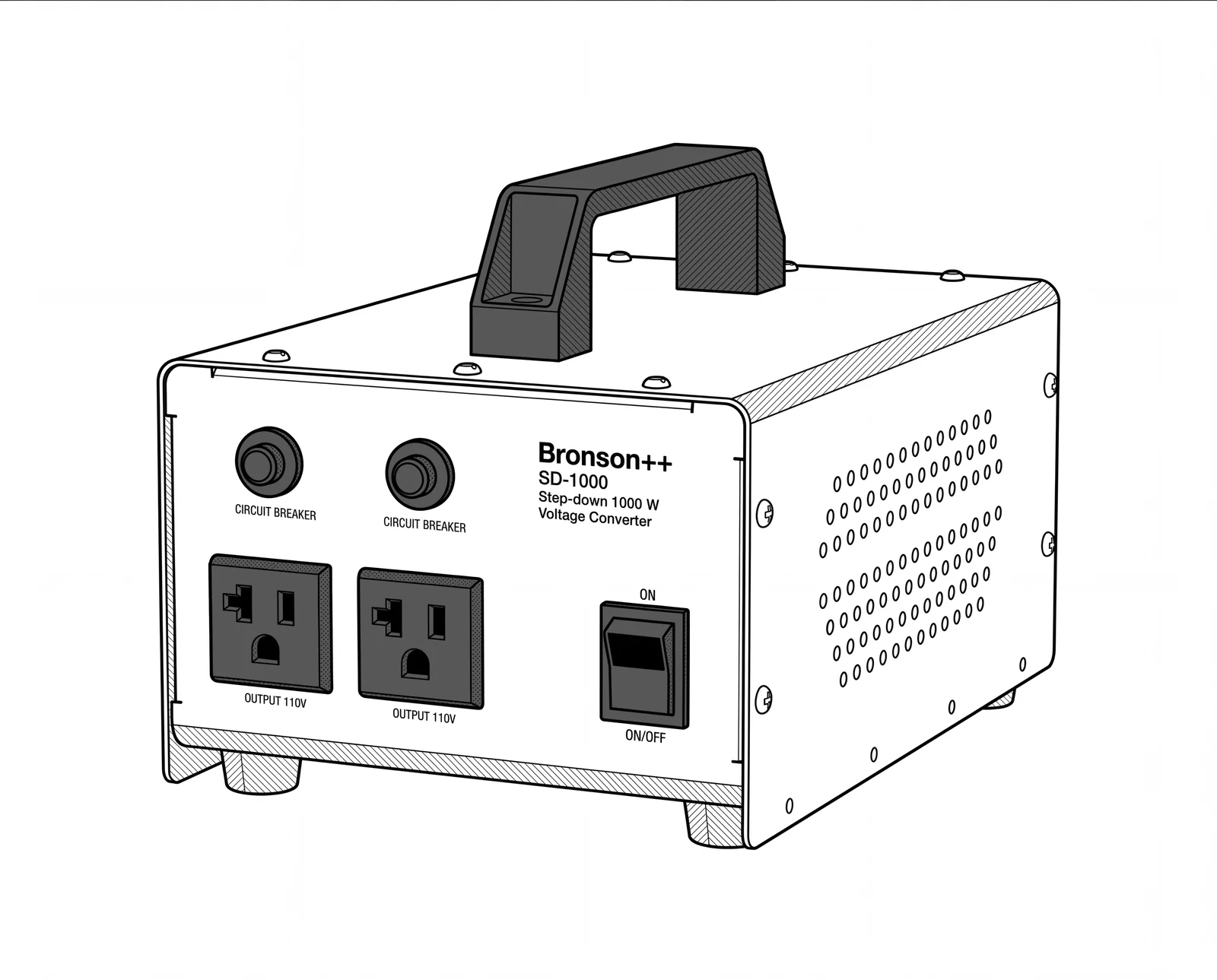
SD Series →
750w - 1600w
For events, rental, and tough conditions. Step-down with a rugged enclosure. Wall-mountable with a carry handle — built for the demands of professional event use.
- Step down only (230V → 110V)
- Rugged enclosure
- Wall-mount & carry handle
Common products wattage:
*Disclaimer: Product names, categories, and references listed on this page are used strictly for compatibility demonstration purposes. All trademarks remain the property of their respective owners, and their mention does not constitute or imply endorsement, sponsorship, or affiliation with our product lines.